Cedar Cladding Restoration

Cladding Restoration
Prime Time
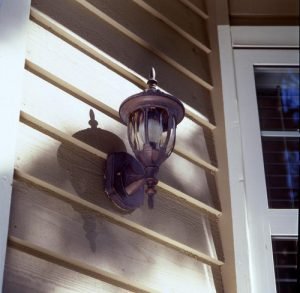 Preparation is key. If you don’t properly prep your cladding surface before applying finish, you may end up dealing with poor adhesion and inconsistent coloration. You can start this process by inspecting the condition of your cladding. Any damage, mildew and/or loose dirt must be dealt with before you do anything else.
To remove dirt, simply wash the cladding with a little warm water and phosphate-free soap. If there’s mold or mildew (look for black or dark brown spots), you will have to kill it either with a commercially available mildew killer or a warm water and oxygen bleach solution. This is a critical step because if dirt or mildew is covered with another coat of finish, the dirt will become sealed in and the mildew/mold will continue to grow if not killed.
Solid Finishes
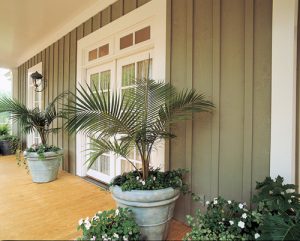 In severe cases where there’s old paint or solid color stain peeling and cracking, you may need to remove the old finish prior to tackling any kind of mildew issues. While there are plenty of ways to strip away these flakey layers, there are no shortcuts – i.e. if you try to cut down on time by power washing your cladding, you will run the risk of seriously damaging the wood. As well, you may compromise the wood’s ability to hold a finish. After you strip off all the peeling finish and sand the bare wood till the edges are smooth, then it’s time to start from scratch and treat the cladding as if it were new wood.
Keep in mind that with opaque finishes, generally speaking you should use the same type of refinishing product as the original finish. So old latex finish should be replaced with new latex, and old oil-based finish should be replaced with new oil-based finish. The exception here being that you can put latex on top of oil-based products. However, you should NEVER put an oil-based product on top of latex. And in terms of how many coats you should apply, it’s very important to follow the manufacturer’s recommendations. Also, always make sure the wood is dry to the touch before applying any kind of finish.
Semi-Transparents and Bleaching Oils
When it comes to clear or semi-transparent stains and bleaching oils, all that’s usually required is a basic cleaning with a stiff bristle brush. If the old finish is a semi-transparent latex stain; however, your cladding may require the same kind of extensive prepping as a solid finish (see above).
Real Cedar in its Raw Form
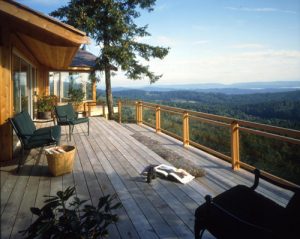 Untreated cladding will eventually turn a beautiful silvery grey. But, if this is no longer the desired effect, you can usually get your cladding back to its original color with wood brighteners, cleaners and restorers. But first you have to sand off the top layer of “skin.” After that, clean, dry and inspect the wood for mildew. Then it’s time choose the finish of your choice.